Weekly Comic
FAIR Plan Insurance: A Fallback, Not the First Stop
The FAIR Plan Fallback explains how state-specific residual insurance programs can provide a safety net when ordinary markets are unavailable, why the policy may not equal a standard homeowners form, and how to build an exit strategy.
Quick answer
FAIR Plans and similar residual-market programs are state-specific mechanisms designed to make basic property insurance available when qualifying owners cannot obtain coverage in the voluntary market. Eligibility, covered perils, limits, inspections, pricing, and application requirements vary. Some plans provide limited named-peril or wind coverage rather than a full homeowners package, so a companion or difference-in-conditions policy may be needed. Compare private options and the complete coverage structure before deciding.
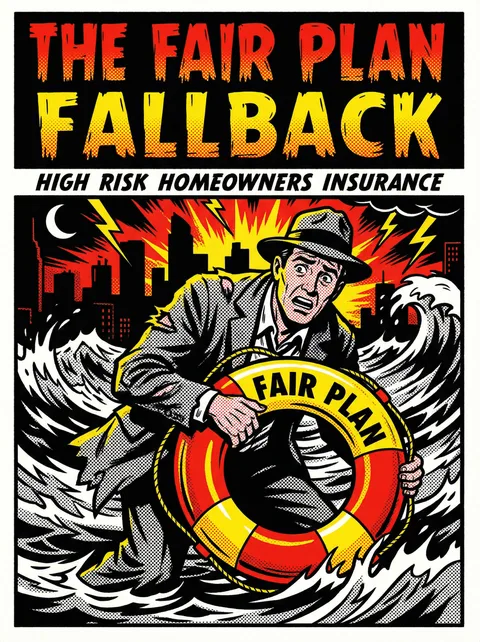
The FAIR Plan Fallback
Weekly Comic
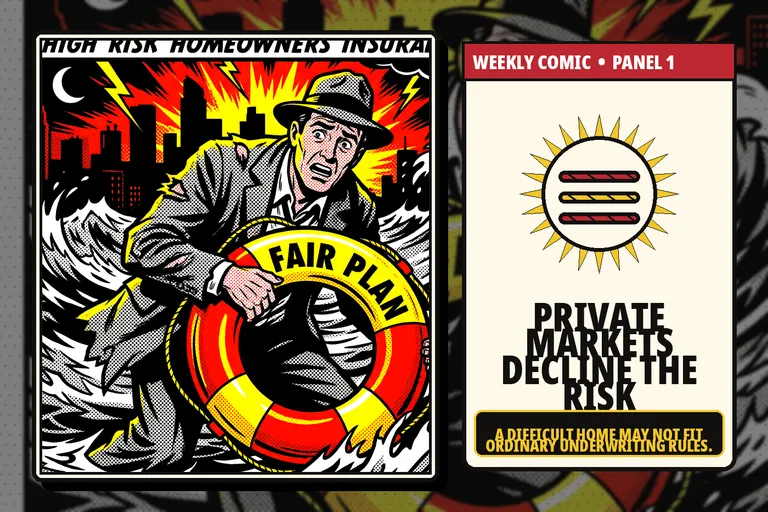
Private markets decline the risk
The homeowner receives declines because of location, condition, claims, roof, or catastrophe exposure. Before assuming there is no private option, verify that the submission is complete and accurate.
Weekly Comic
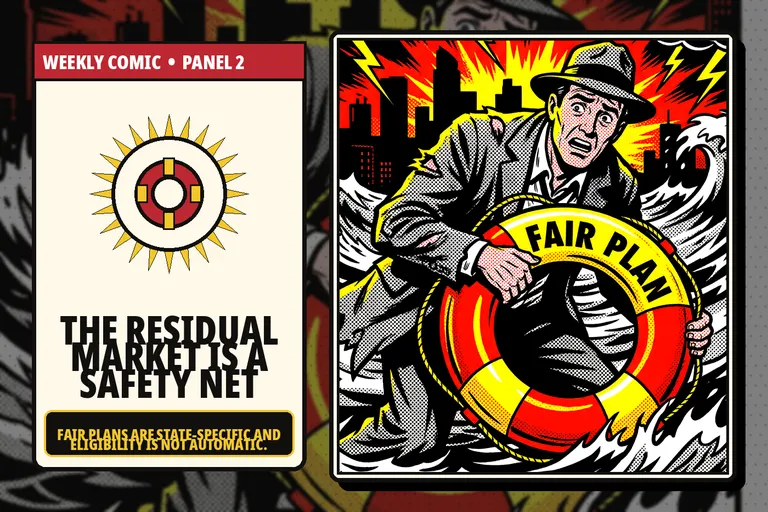
The residual market is a safety net
A FAIR Plan or similar program may be available after required efforts to obtain voluntary-market coverage. The program, territory, application process, and evidence of declinations vary by state.
Weekly Comic
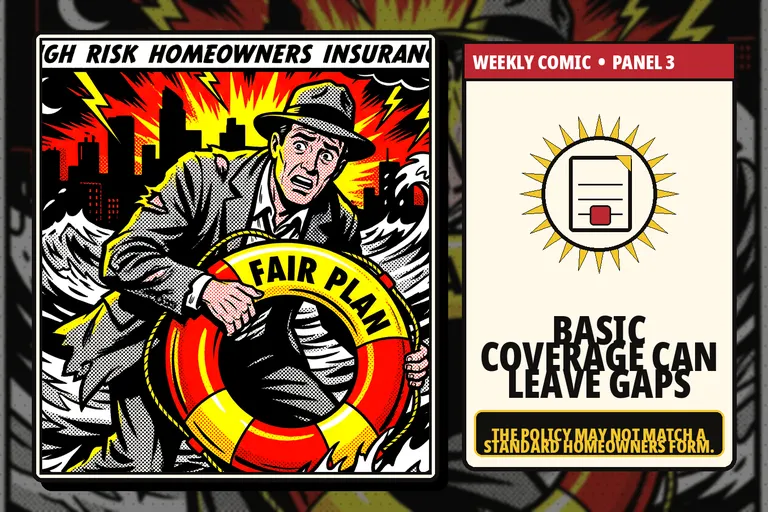
Basic coverage can leave gaps
Some residual plans cover a limited list of property perils or wind only. Liability, theft, water, replacement-cost terms, contents, loss of use, or other protections may be absent or restricted.
Weekly Comic
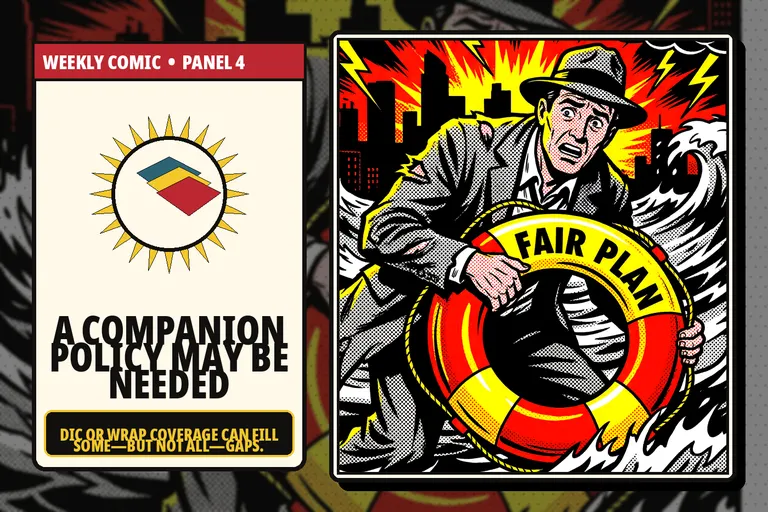
A companion policy may be needed
A difference-in-conditions, wrap, or companion policy may add coverage not included in the residual plan. The policies must be coordinated carefully because exclusions, deductibles, dates, and limits may differ.
Weekly Comic
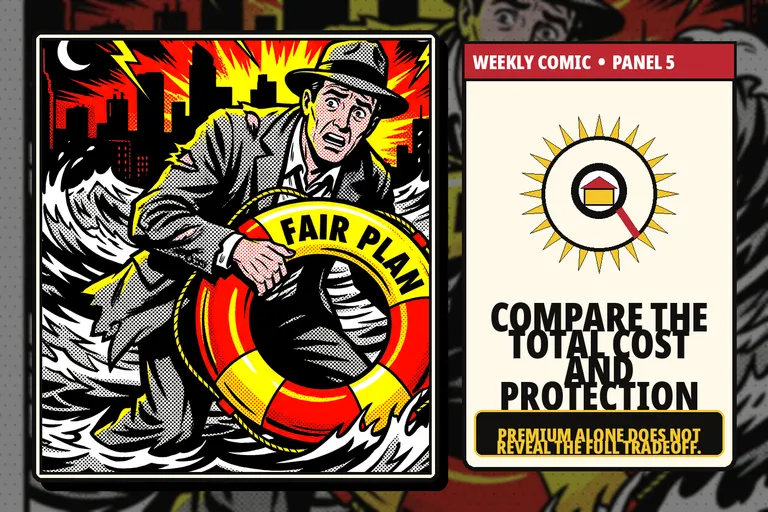
Compare the total cost and protection
Add all premiums and deductibles, then compare limits, valuation, exclusions, inspections, lender acceptance, and claim coordination. A multi-policy structure can be more complex than a single homeowners form.
Weekly Comic
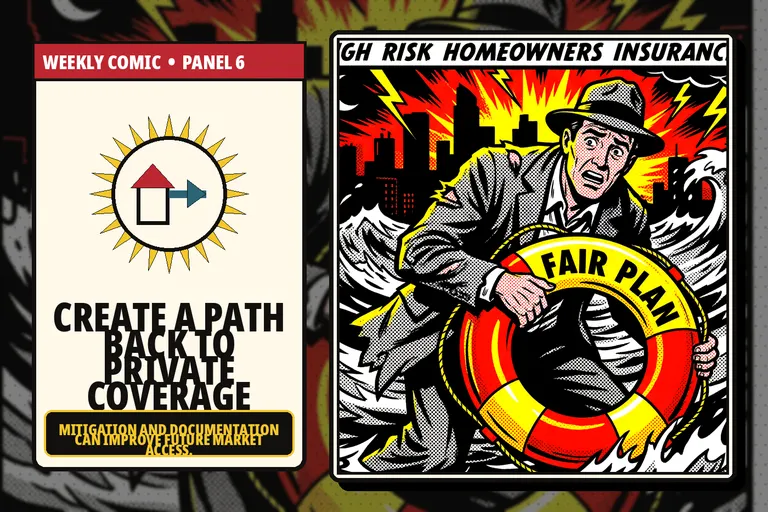
Create a path back to private coverage
Use the fallback period to address roof, wiring, plumbing, brush, claims, vacancy, or other correctable issues. Recheck private markets at renewal because carrier appetite and property conditions change.
Practical next steps
What to do next
- Verify the program and eligibility. Use your state insurance department or the official plan website; do not rely on a generic national description.
- Identify every missing coverage. Compare the residual plan with a standard homeowners form and the lender's requirements.
- Coordinate all policies. Confirm dates, deductibles, limits, valuation, exclusions, and claim-reporting instructions across the package.
- Work toward a private-market exit. Correct insurable conditions, document mitigation, and re-shop at appropriate intervals.
Need help comparing a FAIR Plan with private alternatives?
A licensed high-risk home insurance specialist can review private, specialty, residual-market, and companion-policy structures that may be available. Programs and eligibility vary by state.
Start a coverage reviewCommon questions
FAIR Plan Insurance: A Fallback, Not the First Stop FAQ
Is a FAIR Plan a federal insurance program?
No. FAIR Plans are state-specific residual-market mechanisms created or authorized under state law. Structure and administration vary.
Is FAIR Plan coverage the same as a homeowners policy?
Not necessarily. Some plans provide more limited property or wind coverage and may omit liability or other protections commonly found in homeowners policies.
Do I have to be declined before applying?
Many programs require evidence that voluntary-market coverage is unavailable, but the exact standard and documentation vary by state.
What is difference-in-conditions coverage?
A DIC or companion policy may cover certain perils or protections not included in the residual plan. It does not automatically fill every gap.
Can a mortgage lender reject a FAIR Plan package?
A lender can require coverage that meets the mortgage agreement. Confirm that the complete package, limits, deductibles, and mortgagee wording are acceptable.
Can I leave a FAIR Plan later?
Yes, when eligible private coverage becomes available and the transition is handled correctly. Never cancel existing coverage until the replacement is active.
Official consumer resources
Editorial note: This weekly comic provides general educational information. It is not an insurance policy, binder, quote, coverage offer, legal opinion, or guarantee of eligibility. Actual policy language controls. Underwriting rules, pricing, coverage, eligibility, and availability vary by insurance company and state and may change. Review your specific documents with a licensed insurance professional.
Last reviewed: September 21, 2026.