Weekly Comic
Coastal Home Insurance: Wind, Flood and Coverage Gaps
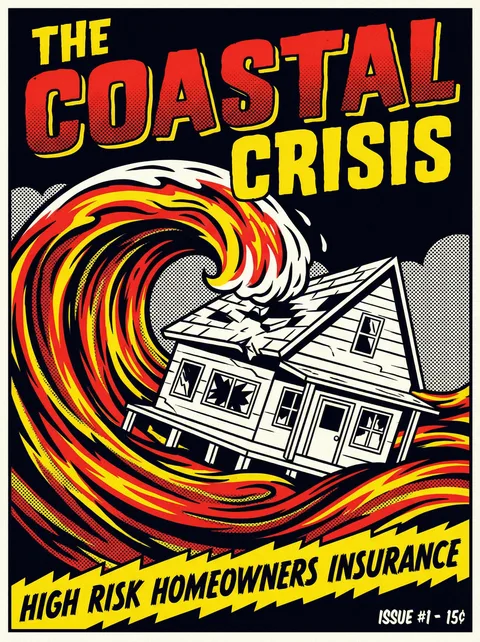
The Coastal Crisis shows why one coastal home may require multiple policies, how wind and flood can be treated differently, and why the lowest premium may not provide the protection a lender or homeowner expects.
Quick answer
Coastal homes may need separate layers of protection. Standard homeowners policies generally do not cover flood damage, and wind or hail may be excluded or subject to a separate deductible depending on the property, state, and insurer. A private carrier, a separate wind policy, a flood policy, and a residual-market plan may each cover different parts of the risk. Review the full package together so important gaps are not hidden between policies.
The Coastal Crisis
Weekly Comic
One home, several hazards
A coastal storm can produce wind damage, wind-driven rain, storm surge, and flooding. Which policy responds depends on the cause of loss and the exact language in each policy.
Weekly Comic
Wind may be separate
In some coastal areas, the primary homeowners policy excludes windstorm or hail. A separate wind policy or residual-market policy may be needed, often with its own deductible and conditions.
Weekly Comic
Flood is a different policy
Flood insurance is typically purchased separately through the National Flood Insurance Program or a private flood insurer. Flood-zone status is not the only reason to evaluate it.
Weekly Comic
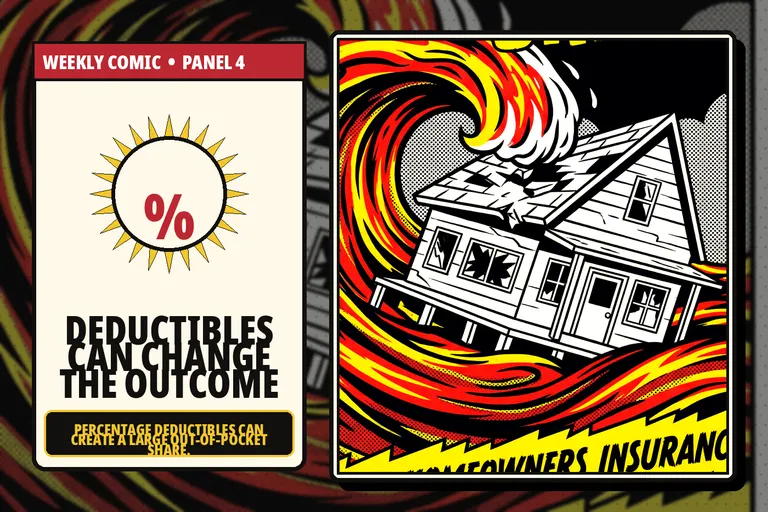
Deductibles can change the outcome
A hurricane, named-storm, wind, or hail deductible may be calculated differently from the standard all-peril deductible. Compare the dollar effect, not only the percentage shown.
Weekly Comic
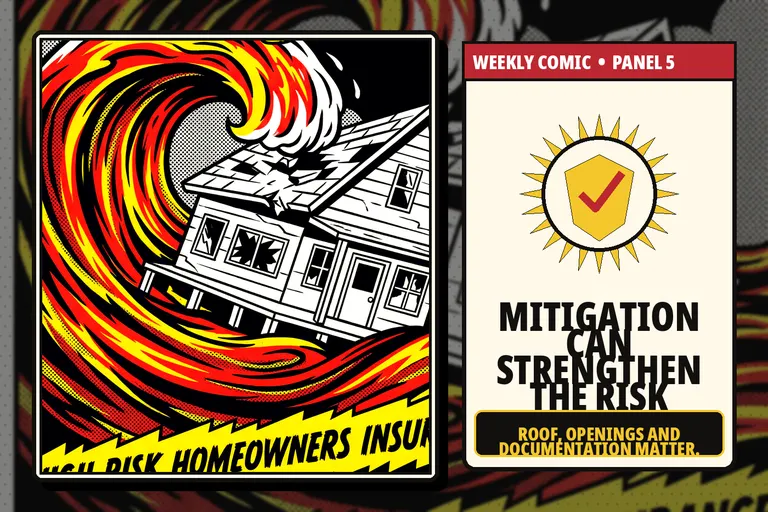
Mitigation can strengthen the risk
A stronger roof, sealed roof deck, protected openings, tie-downs, updated systems, and documented inspections may reduce damage and may help with eligibility or pricing. No improvement guarantees an offer.
Weekly Comic
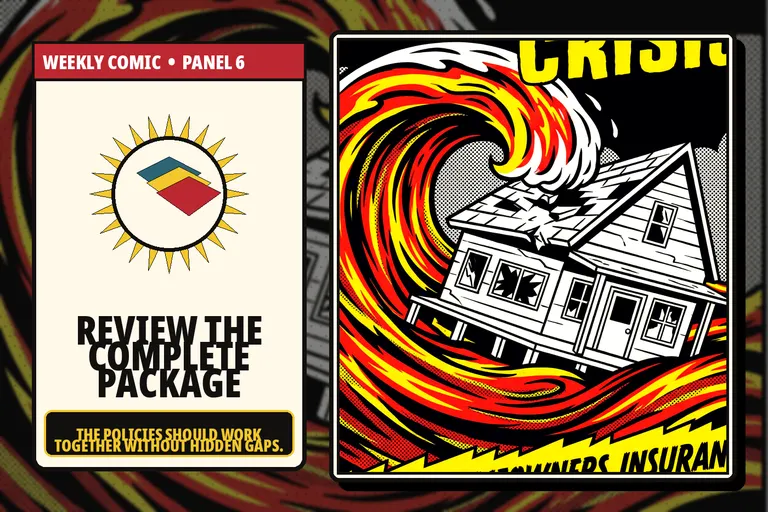
Review the complete package
Compare the homeowners, wind, flood, and any excess or companion policy together. Confirm limits, deductibles, valuation, exclusions, waiting periods, lender requirements, and who handles each claim.
Practical next steps
What to do next
- Separate the perils. Identify which policy covers fire, wind, hail, flood, storm surge, contents, additional living expense, and liability.
- Convert percentage deductibles to dollars. Use the policy's stated basis to estimate what you would pay before coverage responds.
- Verify flood protection separately. Do not assume the homeowners or wind policy includes flood.
- Review the package before binding. Check effective dates, waiting periods, limits, exclusions, valuation, and lender requirements across every policy.
Need help assembling coastal home insurance coverage?
A licensed high-risk home insurance specialist can review private-market, wind, flood, and residual-market options that may be available for the property. Eligibility and terms vary by insurer, location, and state.
Start a coverage reviewCommon questions
Coastal Home Insurance: Wind, Flood and Coverage Gaps FAQ
Does homeowners insurance cover storm surge?
Storm surge is generally treated as flood, and standard homeowners insurance generally does not cover flood damage. The exact cause of loss and policy wording control.
Can wind be excluded from a coastal homeowners policy?
Yes. In some areas and programs, windstorm or hail coverage may be excluded from the primary policy and purchased separately.
What is a hurricane or named-storm deductible?
It is a deductible that may apply to specified storm losses and may be expressed as a percentage of an insured value. Trigger rules and calculations vary by policy and state.
Do I need flood insurance outside a high-risk flood zone?
Flooding can occur outside high-risk zones. Whether to buy coverage depends on the property's exposure, lender requirements, available limits, and the homeowner's risk tolerance.
Is a coastal residual-market plan full homeowners coverage?
It depends on the state and program. Some plans provide wind only or more limited property coverage, while others offer broader forms. Companion coverage may be needed.
Can mitigation guarantee a lower premium?
No. Improvements may reduce damage and may affect eligibility or credits, but insurers and programs set their own requirements and pricing.
Official consumer resources
Editorial note: This weekly comic provides general educational information. It is not an insurance policy, binder, quote, coverage offer, legal opinion, or guarantee of eligibility. Actual policy language controls. Underwriting rules, pricing, coverage, eligibility, and availability vary by insurance company and state and may change. Review your specific documents with a licensed insurance professional.
Last reviewed: September 21, 2026.