Weekly Comic
Wildfire Risk and Home Insurance Nonrenewal
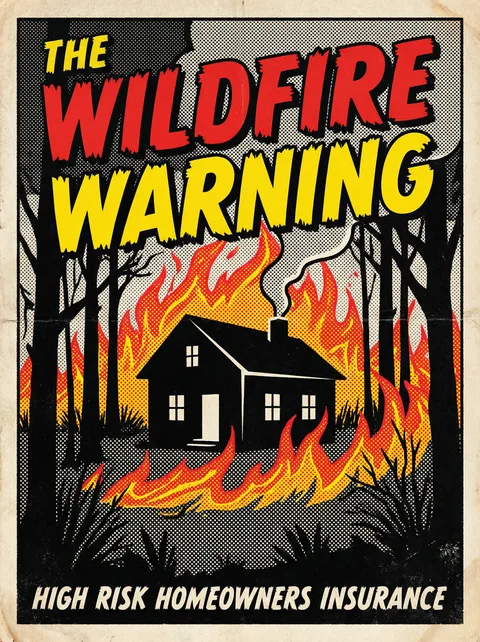
The Wildfire Warning explains why a home can be affected even without a prior fire claim, how insurers evaluate surrounding exposure, and which home-hardening and defensible-space records can support a new insurance review.
Quick answer
A home can face wildfire underwriting restrictions even if it has never had a claim. Insurers may consider vegetation, slope, road access, distance to fire response, water supply, roof and vent construction, nearby structures, catastrophe models, and recent fire activity. Defensible space and home-hardening can reduce risk and may help with eligibility, but they do not guarantee coverage. Begin before the renewal deadline and document every improvement.
The Wildfire Warning
Weekly Comic
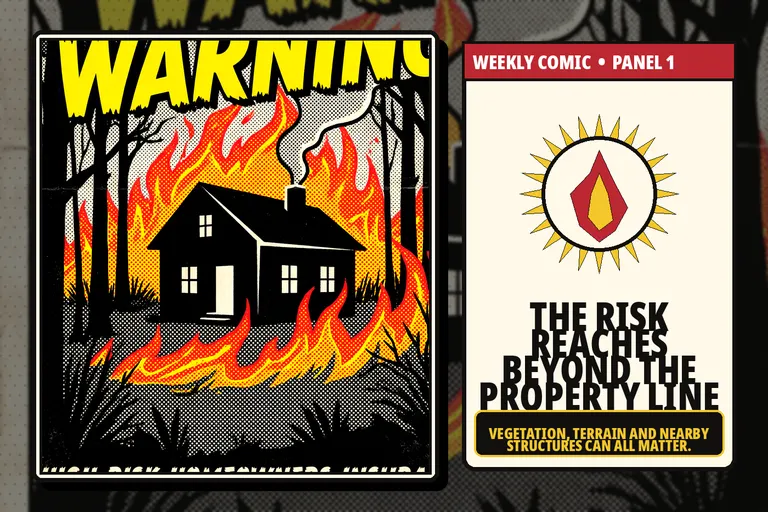
The risk reaches beyond the property line
Wildfire exposure is not limited to trees in the homeowner's yard. Slope, neighboring vegetation, ember pathways, access roads, nearby structures, and broader catastrophe modeling may affect underwriting.
Weekly Comic
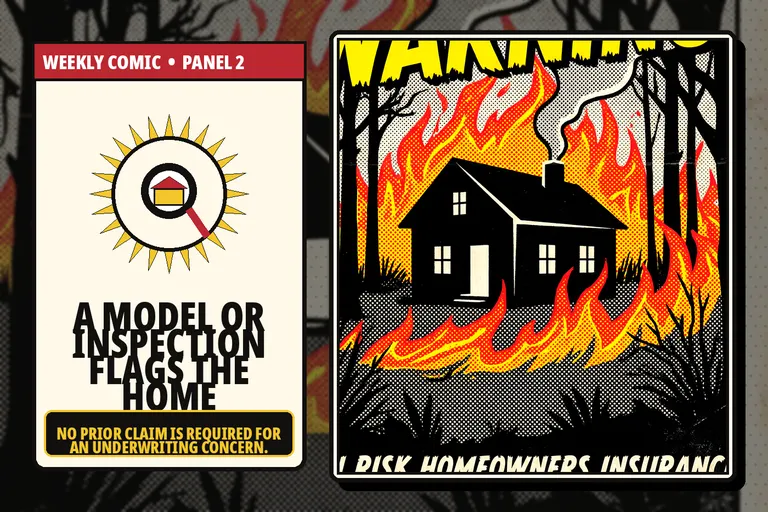
A model or inspection flags the home
An insurer may use inspections, aerial imagery, third-party data, or catastrophe models to evaluate wildfire risk. Data can be incomplete, so homeowners should review notices and correct factual errors where possible.
Weekly Comic
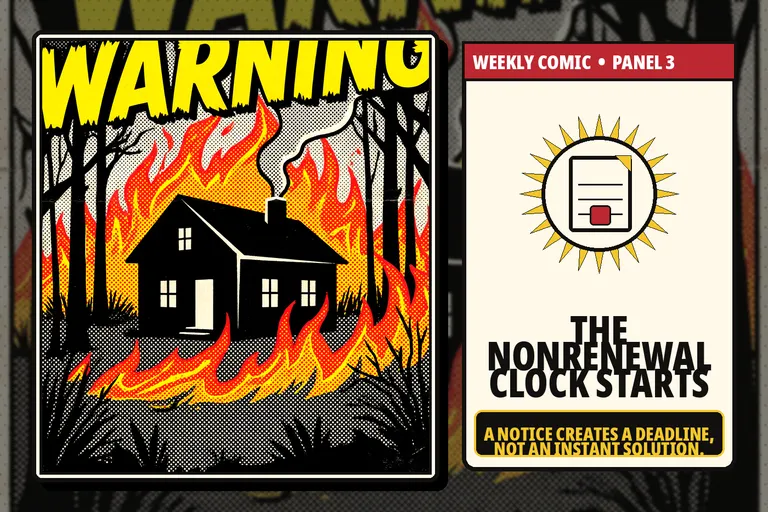
The nonrenewal clock starts
Once a nonrenewal notice arrives, confirm the reason and effective date. Waiting until the final week can leave too little time for inspections, mitigation, or specialty-market review.
Weekly Comic
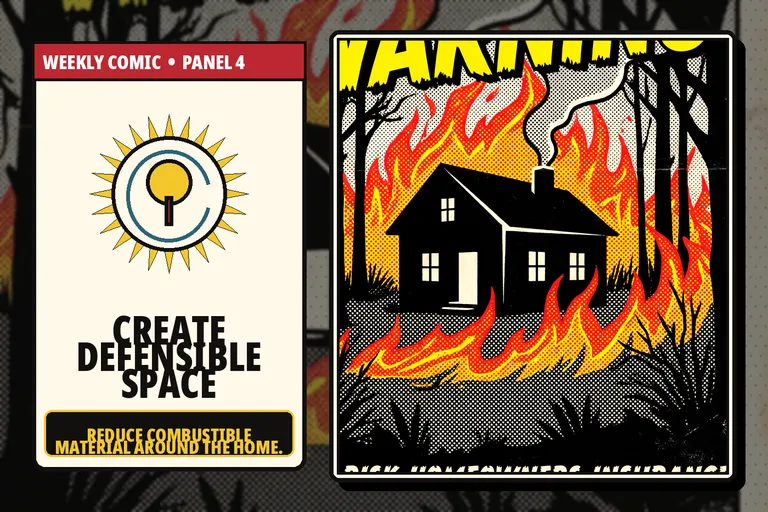
Create defensible space
Trim and space vegetation, remove accumulated debris, maintain access, and follow applicable fire-authority guidance. Exact defensible-space requirements differ by location and program.
Weekly Comic
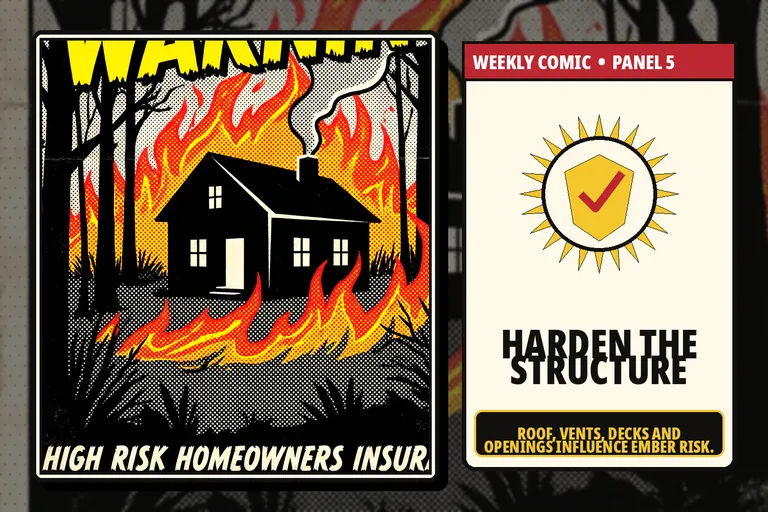
Harden the structure
Class-rated roofing, ember-resistant vents, clean gutters, protected openings, maintained decks, and noncombustible zones near the structure can reduce vulnerability. Use qualified professionals and preserve documentation.
Weekly Comic
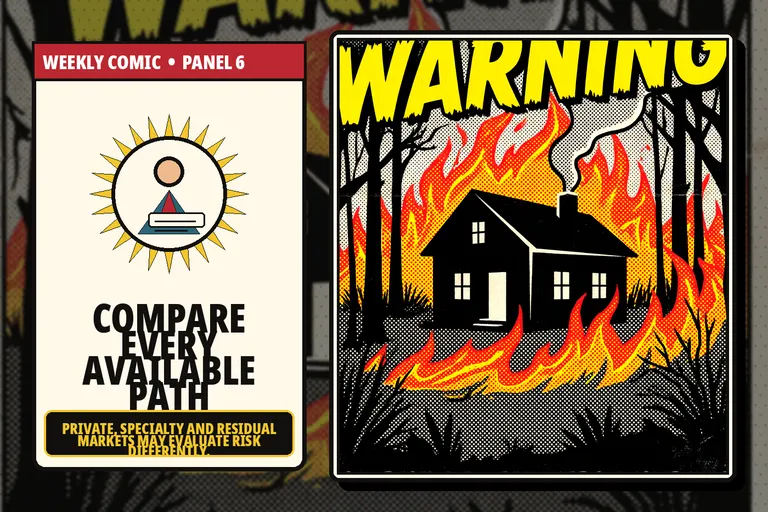
Compare every available path
A licensed specialist can review mitigation and approach available admitted, surplus-lines, or residual-market options where appropriate. Coverage, eligibility, pricing, and forms vary significantly.
Practical next steps
What to do next
- Read the exact reason. Determine whether the notice cites wildfire exposure, vegetation, roof condition, access, inspection findings, or another concern.
- Prioritize high-impact mitigation. Address debris, vegetation, roof and vent vulnerabilities, access, and other items identified by qualified local guidance.
- Create a proof package. Use dated photographs, invoices, inspection reports, permits, and any recognized mitigation documentation.
- Shop early and compare forms. Review deductibles, wildfire exclusions, limits, valuation, and any FAIR or residual-market companion coverage.
Need help after a wildfire-related nonrenewal?
A licensed high-risk home insurance specialist can review the notice, mitigation documentation, property details, and currently available private or residual markets. Availability varies by location, insurer, and state.
Start a coverage reviewCommon questions
Wildfire Risk and Home Insurance Nonrenewal FAQ
Can an insurer nonrenew a home that has never had a wildfire claim?
It may, subject to applicable law and notice requirements. Insurers can evaluate future catastrophe exposure, property features, vegetation, access, and their underwriting guidelines.
What is defensible space?
Defensible space is the managed area around a structure intended to reduce wildfire fuel and improve response access. Recommended distances and treatments vary by jurisdiction and site.
Do satellite images always show current conditions?
Not necessarily. Images and third-party data can be outdated or incomplete. Provide current photographs and documentation if the insurer's information appears inaccurate.
Will home hardening guarantee insurance?
No. It can reduce physical risk and may improve eligibility or credits, but each insurer or program applies its own rules.
What should I compare in a wildfire policy?
Review limits, deductibles, replacement-cost terms, wildfire or brush exclusions, debris removal, ordinance or law, trees and landscaping, additional living expense, and inspections.
Is a FAIR Plan the only option in a wildfire area?
Not always. Private admitted or surplus-lines options may exist. Residual plans are state-specific and often should be compared with any needed companion coverage.
Official consumer resources
Editorial note: This weekly comic provides general educational information. It is not an insurance policy, binder, quote, coverage offer, legal opinion, or guarantee of eligibility. Actual policy language controls. Underwriting rules, pricing, coverage, eligibility, and availability vary by insurance company and state and may change. Review your specific documents with a licensed insurance professional.
Last reviewed: September 21, 2026.