Weekly Comic
Zero-Dollar Home Insurance Claims
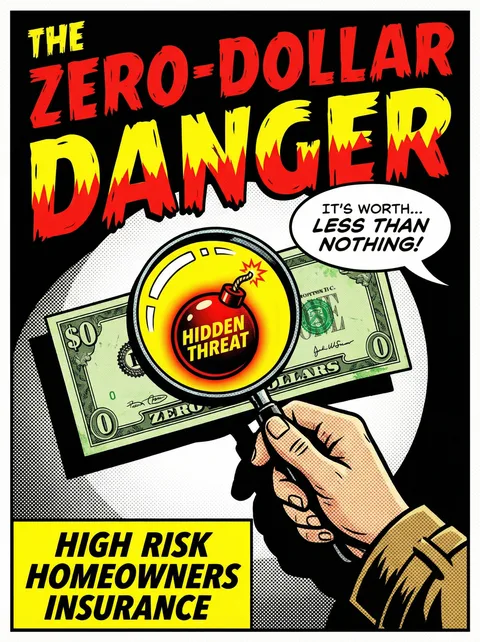
The Zero-Dollar Danger explains why a reported loss can still matter when no claim payment is made, how underwriting may view the record, and what homeowners can document before the next insurance review.
Quick answer
A reported homeowners loss may still be recorded even when the insurer pays $0. Insurers may consider the type, timing, frequency, cause, repair status, and surrounding facts. Not every inquiry or report is handled the same way. When it is safe and practical, review the policy, deductible, and notice duties, document the damage, and ask a licensed professional how the report may be recorded. Do not delay emergency mitigation or any notice required by the policy.
The Zero-Dollar Danger
Weekly Comic
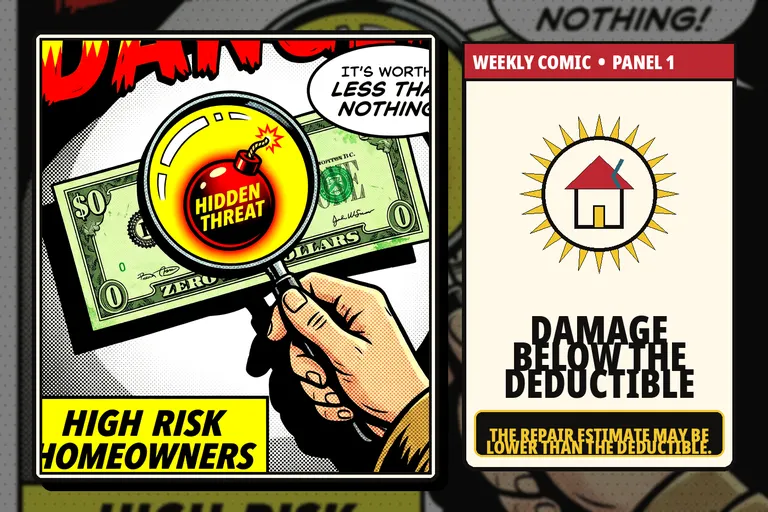
Damage below the deductible
A homeowner discovers damage and reports it, but the repair estimate may fall below the policy deductible or the loss may not qualify for payment. That does not always mean the report disappears.
Weekly Comic
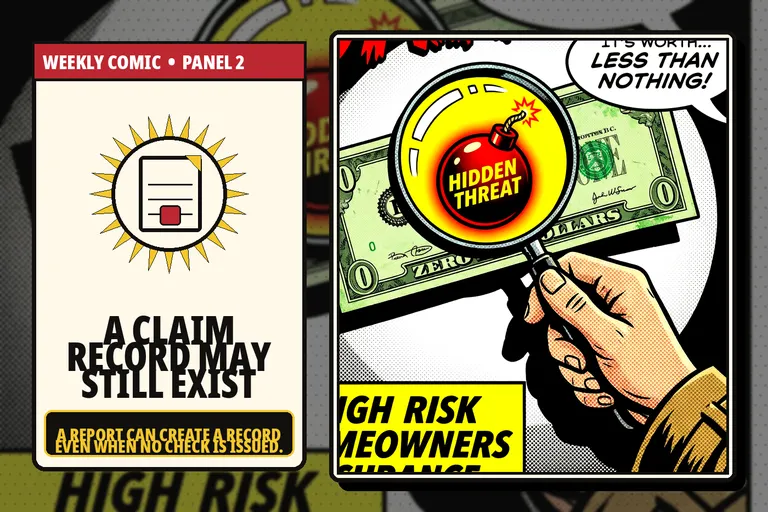
A claim record may still exist
Depending on how the insurer handles the contact, a reported incident may appear in the company's records or in an insurance loss-history database. Procedures differ by insurer and state.
Weekly Comic
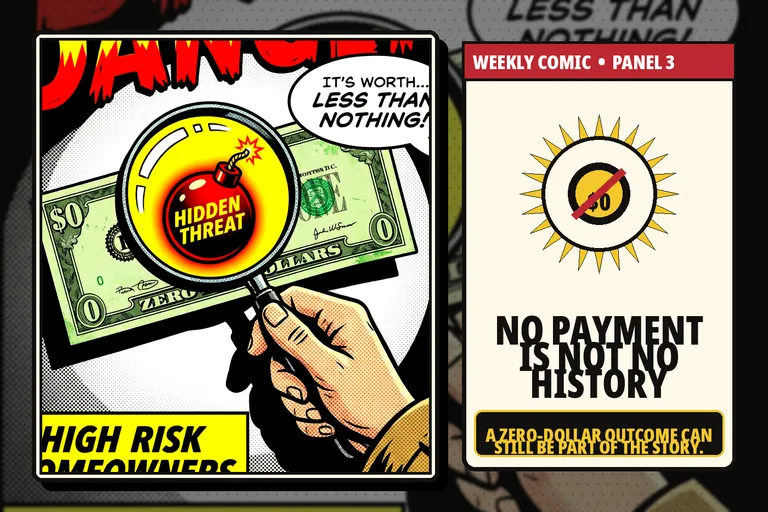
No payment is not no history
A $0 payment does not automatically make the event irrelevant. Future underwriters may evaluate why it was reported, whether damage was repaired, and whether similar losses could happen again.
Weekly Comic
Future underwriting may see it
Insurers use different underwriting guidelines. One company may view the event as minor while another may ask for more information or decline to quote. There is no universal outcome.
Weekly Comic
Check the record and document repairs
Keep photographs, estimates, paid invoices, permits, inspection reports, and proof that the source of damage was corrected. If a loss-history report is inaccurate, use the report provider's dispute process.
Weekly Comic
Make an informed next move
Address urgent damage promptly. When time permits, review the policy and deductible and speak with a licensed professional about notice requirements, possible claim recording, and available insurance options.
Practical next steps
What to do next
- Stop additional damage. Take reasonable emergency steps and preserve receipts, photographs, and damaged materials when safe.
- Compare the estimate with the deductible. A deductible is only one part of the decision; coverage terms, hidden damage, and policy notice duties may also matter.
- Understand how the contact will be handled. When practical, ask whether the conversation is a general inquiry or a formal claim report. Procedures vary.
- Preserve the paper trail. Keep repair evidence and review any available loss-history report for accuracy.
Need help explaining prior claims or a zero-dollar loss?
A licensed high-risk home insurance specialist can review the available loss information, repair records, and current markets. Coverage is not guaranteed, and eligibility, pricing, terms, and availability vary by insurer and state.
Start a coverage reviewCommon questions
Zero-Dollar Home Insurance Claims FAQ
Can a claim appear in my history if the insurer paid nothing?
It may. A reported incident can sometimes be recorded even if no payment is made. How it is recorded and used varies by insurer, database, state, and the facts of the loss.
Does a zero-dollar claim automatically cause a nonrenewal?
No. There is no automatic universal result. Insurers may consider the cause, type, timing, frequency, repair status, property condition, and their own underwriting rules.
Should I avoid reporting damage?
Do not ignore emergency damage or a policy requirement to give notice. When it is safe and practical, review the policy and speak with a licensed professional about the deductible, coverage, and reporting process.
What documents can help after a no-payout claim?
Photographs, estimates, invoices, permits, inspection reports, mitigation records, and proof that the cause was corrected can help explain the event.
Can I dispute an inaccurate claim-history record?
Loss-history report providers generally have a dispute process. Request the report, identify the disputed item, and submit supporting documents according to the provider's instructions.
Who decides whether the home is eligible for coverage?
Each insurance company applies its own underwriting rules and decides whether to quote, what terms apply, and the premium.
Editorial note: This weekly comic provides general educational information. It is not an insurance policy, binder, quote, coverage offer, legal opinion, or guarantee of eligibility. Actual policy language controls. Underwriting rules, pricing, coverage, eligibility, and availability vary by insurance company and state and may change. Review your specific documents with a licensed insurance professional.
Last reviewed: September 21, 2026.